Industrial protocols
MQTT, Modbus TCP/RTU, OPC UA, SLMP, serial and vendor-specific PLC communication can be used where technically suitable.
 M V Multitech ControlsIndustry 4.0 & IoTDiscuss your project ↗
We help manufacturers connect machines, PLCs, sensors and production systems so operating data becomes visible and useful. Our Industrial IoT solutions are developed for plants in Gurugram, Basai, Kadipur, Manesar and Delhi NCR, with architecture chosen around your installed equipment, network policy and reporting goals.
Final architecture and scope are confirmed after reviewing your application, installed equipment and acceptance criteria.
MQTT, Modbus TCP/RTU, OPC UA, SLMP, serial and vendor-specific PLC communication can be used where technically suitable.
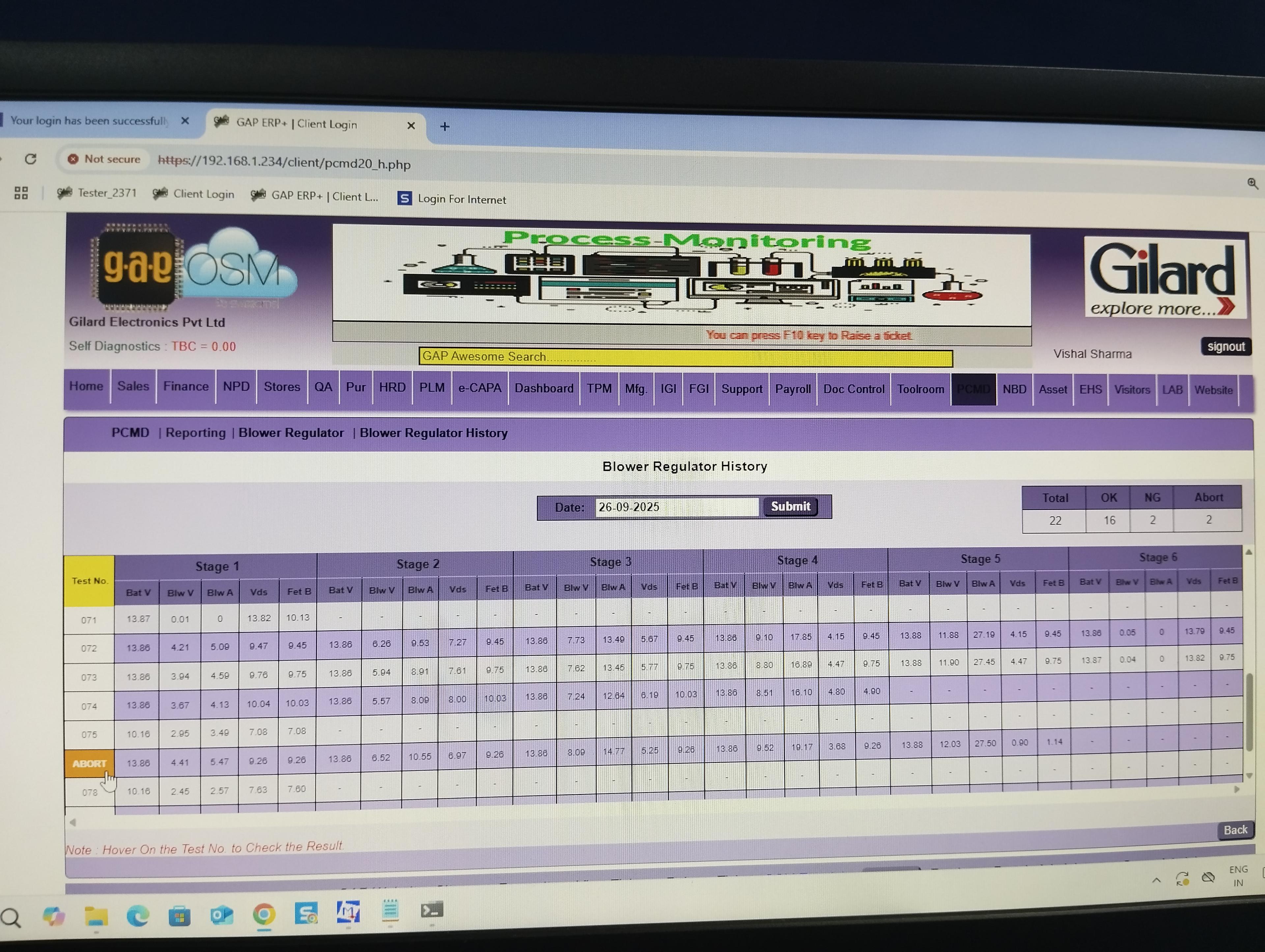
Cycle counts, alarms, process values, test results, downtime and machine-health signals are collected from existing controls.
Role-appropriate web, desktop or HMI views present production status, OEE, yield, trends and bottlenecks.
Events can trigger email, Telegram or WhatsApp notifications based on the approved integration method and plant policy.
Barcode, QR, RFID and laser-marked identities can connect each component with its process and test history.
Validated production data can be exchanged with custom MES, ERP, SAP or database systems through agreed interfaces.
We identify PLCs, devices, protocols, available tags, network boundaries and data ownership.
We define edge collection, storage, dashboards, alerts, access control and integration points.
A focused machine or line pilot verifies data quality and user workflows before broader rollout.
We commission the system, document it and help production, maintenance and quality teams use the information.
Often yes. Feasibility depends on the PLC or controller, available communication ports, supported protocols, program access and plant network policy.
Usually the first step is to evaluate the existing control system. A gateway, edge device or software connector may be sufficient when the required data is accessible.
Yes, where the ERP or MES provides a suitable API, database or file interface. We define the data mapping, direction, validation and failure handling during engineering.
A factory to connect. Software to build.
A process to automate. Let’s talk.