Test methods
Pressure decay, differential pressure, vacuum decay, mass flow and water-dip testing are selected according to the component and acceptance criteria.
 M V Multitech ControlsIndustry 4.0 & IoTDiscuss your project ↗
M V Multitech Controls designs and builds application-specific leak testing machines for manufacturers in Gurugram, Basai, Kadipur, Manesar and the wider Delhi NCR. We engineer the test method, sealing fixture, controls, HMI and result recording around your component, required leak limit and production cycle time.
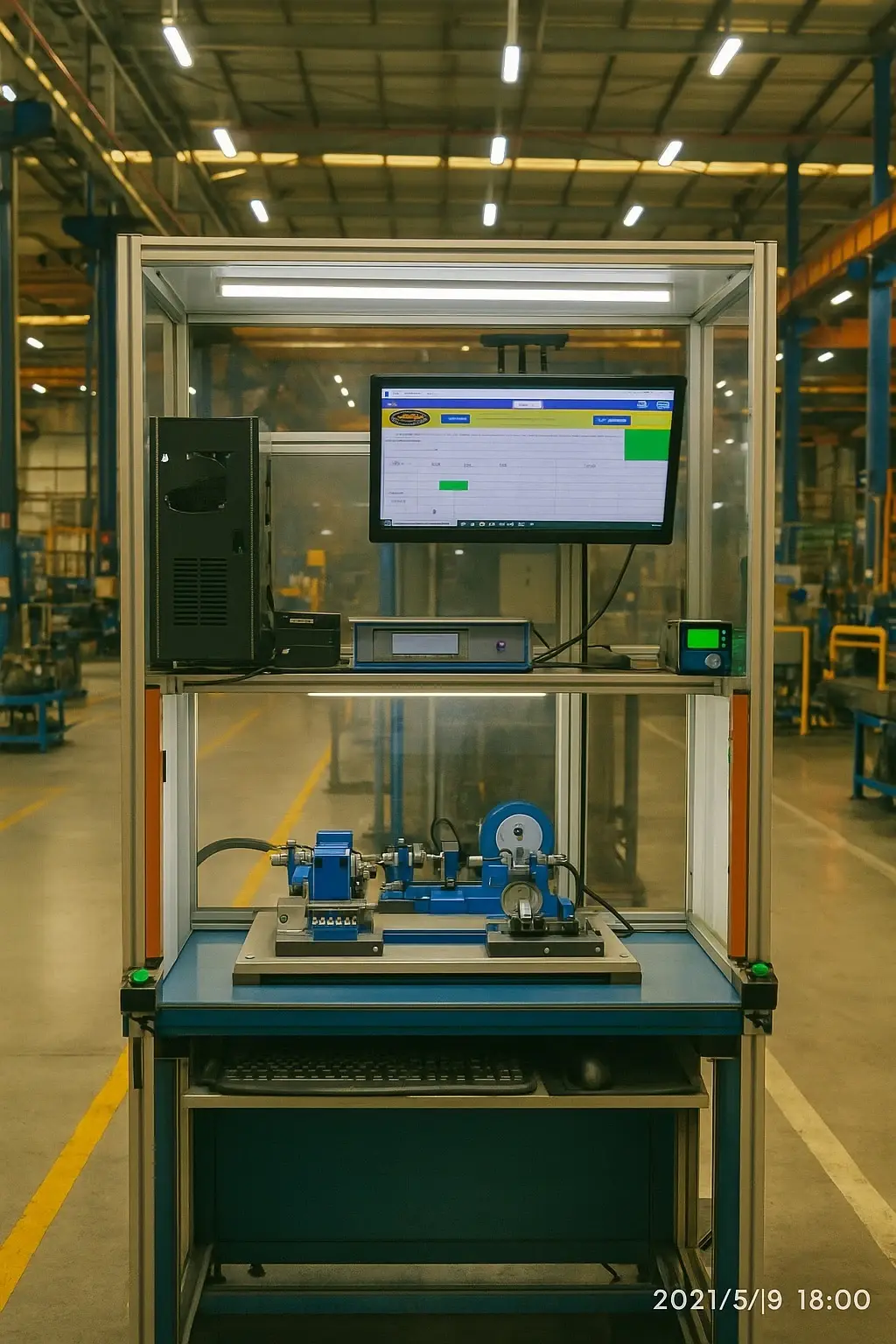
Final architecture and scope are confirmed after reviewing your application, installed equipment and acceptance criteria.
Pressure decay, differential pressure, vacuum decay, mass flow and water-dip testing are selected according to the component and acceptance criteria.
Pneumatic or manual sealing, component clamping, part-presence sensing and change parts are developed for your geometry.
Pressure transducers, flow instruments, PLC logic and HMI screens manage filling, stabilisation, testing and exhaust.
Part identification, pressure-time curves, OK/NG results and test values can be logged to CSV, SQL, MES or ERP systems.
The station can include marking, reject interlocks, barcode or QR scanning and upstream or downstream machine handshakes.
Master verification routines, calibration provisions and repeatability checks help establish a dependable production process.
We study the component, test pressure, permissible leak rate, medium, cycle time and traceability requirement.
We define the test principle, sealing points, clamping sequence, instrumentation and safety controls.
The machine is assembled, programmed and checked against agreed samples and acceptance criteria.
We commission the system, train operators and support integration with your production workflow.
The right method depends on component volume, test pressure, acceptable leak rate, material, sealing points and cycle time. We review these details before recommending pressure decay, vacuum, mass flow or water-dip testing.
Yes. The sealing and clamping fixture is designed around the component drawing or physical sample, including part detection and changeover requirements.
Yes. Results can be linked with a barcode or QR code and stored in CSV, Excel-compatible files, SQL databases, MES or ERP systems according to project scope.
A factory to connect. Software to build.
A process to automate. Let’s talk.